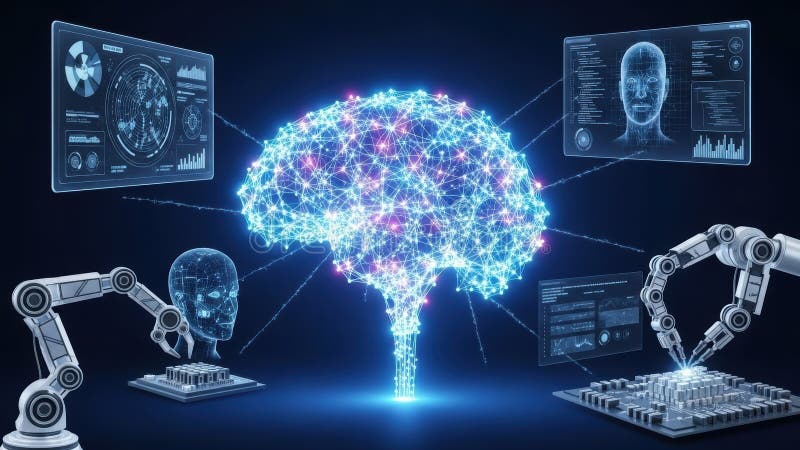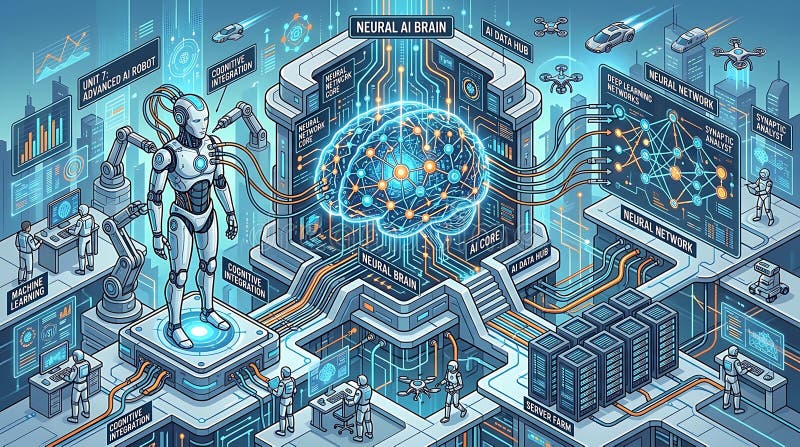
We are witnessing the dawn of a new era in software engineering—transitioning from simple AI code completion tools to fully autonomous agentic networks capable of designing, building, testing, deploying, and maintaining web applications independently. As frontier artificial intelligence models grow more capable in reasoning and tool usage, the traditional boundary between ideation and production software continues to shrink. This forward-looking industry report investigates emerging technological trends shaping the future of AI web creation, including autonomous coding agents, self-healing codebases, personalized generative UIs, and agentic maintenance systems.
The report analyzes revolutionary technological concepts moving from research laboratories into production web development workflows. Key topics include 'self-healing code'—systems where production monitoring tools automatically detect runtime exceptions or broken layout links, dispatching AI agents to write, test, and deploy hotfix pull requests without human intervention. The guide explores 'generative user interfaces', where web layouts dynamically adapt in real time to individual user preferences, browsing habits, and context, generating unique, tailor-made interfaces on the fly.
By examining how emerging autonomous workflows will impact developers, designers, agencies, and digital businesses, this report provides strategic clarity on how to adapt and thrive in an AI-native web development ecosystem. Prepare your technical skill set for the future of software creation and harness the transformative power of autonomous AI engineering.
The strategic question
The useful question is not whether The Future of AI Web Creation sounds impressive. It is where the approach creates measurable leverage, and where it introduces new risk. In 2026, the strongest teams treat AI as a force multiplier inside a defined operating model. They specify the decision, the constraints, the owner, and the evidence required before asking a system to produce an answer. That habit is more valuable than any individual prompt or product feature.
What the evidence suggests
The source material for this field note is Future Tech Horizon & AI Software Engineering Institute. It should be read as a starting point for evaluation rather than a promise of universal results. Product capabilities, pricing, model quality, and platform limits change quickly. A responsible comparison therefore separates observable behavior from vendor language: test the workflow with representative inputs, measure the output against a human baseline, and record the manual work that remains after generation.
A practical operating model
Start with a small, bounded project. Define success in plain language, list the inputs the system can access, and decide which actions still require human approval. Then create a repeatable loop: brief the task, generate a first pass, inspect the result, run a quality check, and capture what changed. This makes progress visible and prevents the common mistake of confusing a fast first draft with a finished product. The same loop works for design, engineering, research, and content operations.
Where teams get stuck
The most common failure is context loss. An AI system may produce fluent output while missing a business rule, an edge case, or a requirement hidden in another document. Teams also underestimate review costs: generated work can move quickly into testing, but testing still needs expertise. Protect the workflow with a source-of-truth brief, small batches, explicit acceptance criteria, and a review queue for anything that affects privacy, money, safety, accessibility, or customer trust.
The implementation checklist
Before adopting this workflow, audit the data that will pass through it. Remove secrets and unnecessary personal information, confirm how providers retain inputs, and set a clear deletion policy. Check portability: can you export the work, replace the model, or continue without the platform? Check observability: can you see failures, regressions, and unexpected usage? Finally, check accessibility and mobile behavior in the actual experience, not only in a generated preview.
A balanced recommendation
For independent creators and small teams, the highest return usually comes from using AI for exploration, scaffolding, repetitive transformations, and structured critique. Keep human ownership over goals, brand judgment, security decisions, factual claims, and final publication. Larger organizations can add permissions, evaluation datasets, audit logs, and staged releases. These controls may feel slower at first, but they make the speed advantage durable by reducing rework and avoidable incidents.
What to watch next
The next phase will be defined less by novelty and more by integration. Systems will connect to design libraries, repositories, analytics, support records, and deployment pipelines. That convergence will make provenance, permissions, and rollback central product concerns. Watch for tools that explain their assumptions, expose useful logs, respect user-controlled data boundaries, and make it easy to compare generated output with a human-approved standard.
This article draws on Future Tech Horizon & AI Software Engineering Institute and the linked reference below. Product details should be checked against the provider's current documentation before a purchase or production decision.
Open reference source ↗